Less than six month until engine emissions enforcement

There is less than six months to go before a major change in emissions regulations has a considerable impact on tug and workboat design, construction and operation. From January 2021, IMO Tier III regulations for commercial vessels with diesel engines will come into force. This imposes rules on the emissions from diesel engines on vessels with a total power of more than 130 kW, and with their keel laying date after 1 January 2021. Vessels built after this date will need cleaner diesel engines and after treatment systems to minimise nitrogen, sulphur oxide and particulate matter emissions. This could lead to a rush to order new tugs and workboats before that date if owners want to miss this restricting ruling. It is already in the minds of some tug and workboat builders as they produce vessels that can be retrofitted with emissions abatement technology. Read more at Riviera News 


MARPOL amendments to permit electronic record books from October

From 1st October, amendments to MARPOL Annex I, II, V, VI and the NOx Technical Code will permit the use of electronic record books, to enable the accurate record keeping of movements of shipboard substances and materials hazardous to the environment. These amendments follow resolutions adopted at Marine Environment Protection Committee (MEPC) 74 in May 2019, and are applicable to:

  • Oil Record Book, parts I and II
  • Cargo Record Book
  • Garbage Record Book, parts I and II
  • Ozone-depleting Substances Record Book
  • Recording of the tier and on/off status of marine diesel engines
  • Record of Fuel Oil Changeover; and
  • Record Book of Engine Parameters.

An electronic record book used as an alternative to an official hard copy record book is required to be assessed by the Flag Administration following which a written confirmation (Declaration of MARPOL Electronic Record Book) will be issued. More info: Safety 4 Sea 


IMO 2020 overshadowed by COVID-19, but challenger remain

The next key regulatory milestone is the 2030 regulations where a reduction of 40% of carbon emissions is the current objective. It is widely expected that this threshold will be increased. To date, in the first quarter of 2020, the Maritime Port Authority of Singapore (MPA) reported that most ships calling at the ports of Singapore have complied with the regulation. It was further reported that based on the pre-arrival notification submitted to MPA, 96% of the ships calling at Singapore used compliant fuel. This excludes ships installed with open loop scrubbers that switch to using compliant fuel upon arriving at Singapore as the use of open loop scrubbers is prohibited in the port of Singapore. In addition, DNV GL reported about 4,000 ships being fitted with scrubbers and more were scheduled to do so during the year due to the price difference between heavy fuel oil (HFO) and low sulphur fuel oil (LSFO). This spread has since reduced to significantly below USD $100 per metric tonne. More information: Safety 4 Sea


New BWTS approval Guidelines coming to force 28 October 2020

Owners and operators require contingency plans for their BWTS as part of their preparations for the October IMO G8 type-approval deadline. The IMO G8 guidelines define the type-approval process for ballast water treatment systems (BWTS) under IMO legislation. The revised G8 guidelines, are robust and more in line with today’s U.S. Coast Guard (USCG) requirements.

All BWMS installed onboard ships on or after 28 October, 2020 will need to be approved for use in accordance with the BWMS Code or 2016 Guidelines (New G8). The new G8 Guidelines include more descriptive guidelines in respect to system testing, control and monitoring of system, and test reporting.

List of manufacturers that are in compliance with G8 Standards:

Maker

System Name

Issue Organization/Flag

Alfa Laval

PureBallast 3.2

DNV GL

DESMI

CompactClean

LR

Qingdao Headway

OceanGuard

DNV GL

Hyundai Heavy Industries

HiBallast

DNV GL

SunRui

BalClor

DNV GL

Envirocleanse

inTank

DNV GL

Evac/Cathelco

Evolution

LR

ERMA FIRST ESK

ERMA FIRST ESK

Hellenic Republic

COSCO

Blue Ocean Shield

DNV GL

Panasia

GloEn-Patrol 2

DNV GL

BAWAT A/S

BAWAT BWMS MK2

LR

TeamTec Oceansaver AS

Oceansaver BWTS Mk IIB

DNV GL

Hyde Guardian (Calgon)

Hyde Guardian – US

DNV GL

Techcross Inc.

ECS HYCHLOR

DNV GL

Wӓrsilӓ UK Ltd

AQUARIUS UV

DNV GL

Kuraray Co., Ltd.

Microfade II

Netherlands

Elite Marine Corp.

Seascape BWMS

DNV GL/Norwegian Maritime Authority

Wӓrtilӓ UK Limited

Aquarius EC BWMS

DNV GL/Norwegian Maritime Authority


28 October 2020, is looming fast. After that date, only ballast water systems conforming to the 2016 G8 guidelines will comply with IMO criteria.

Albion Marine Solutions offers end-to-end solutions, managing all aspects of the project from selection and procurement of the suitable system to detailed engineering design, completion of modifications, installation, training and support. We maintain an extensive technical and commercial database of BWTS currently available on the market. Albion Marine Solutions closely collaborates with a number of BWTS suppliers. Our personnel are trained by equipment manufacturers, have marine background and hands-on experience in project management of fleet upgrade programs.

Please contact our general office (This email address is being protected from spambots. You need JavaScript enabled to view it.) for additional information

Albion Team Updates July 2020 (2)

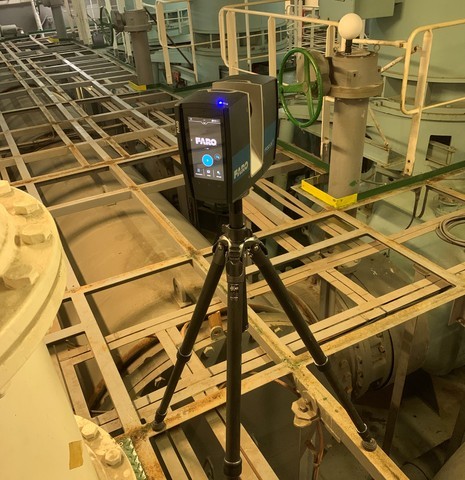
Albion Marine's team has successfully completed a 3D Scan, designing and onsite support for scrubber retrofit of Five 10000 TEU vessels and 14000 TEU vessels for a leading shipping company.


Albion Marine Solutions Ltd.

108-1525 Broadway Street Port Coquitlam,

BC, V3C 6P6

Canada

Email: info@albionmarine.com

Tel     : +1 604 529 8488


Home

Our Services

Procurement

Contact Us

News 

Careers